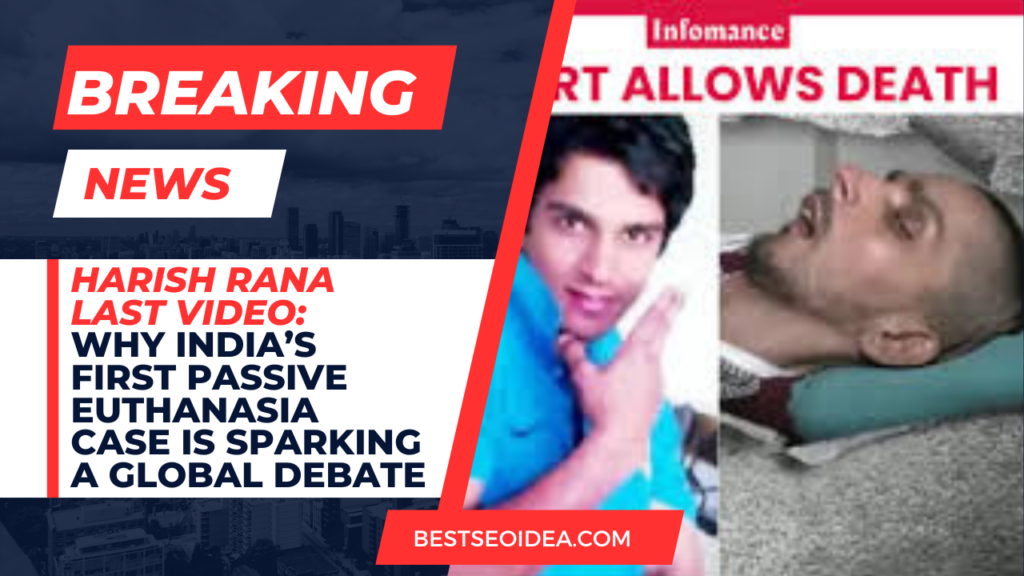
Passive Euthanasia: On March 2026, India reached a profound legal and ethical milestone as the Supreme Court authorized what is being described as the nation’s first court-sanctioned implementation of “passive euthanasia.” The case involves 32-year-old Harish Rana, a former engineering student who has spent the last 13 years in a persistent vegetative state (PVS).
Table of Contents
India’s First Passive Euthanasia Case
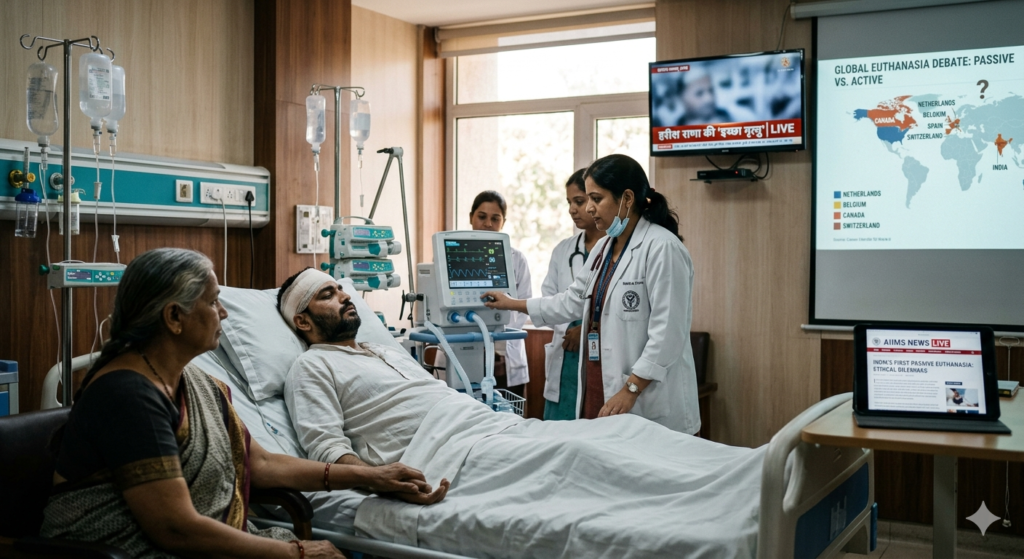
Following the historic verdict, Harish was moved to AIIMS Delhi for the structured withdrawal of life support, marking a shift from years of medical “prolongation” to a journey toward “dignity.”
The Case of Harish Rana: From a Fall to a Landmark Fight
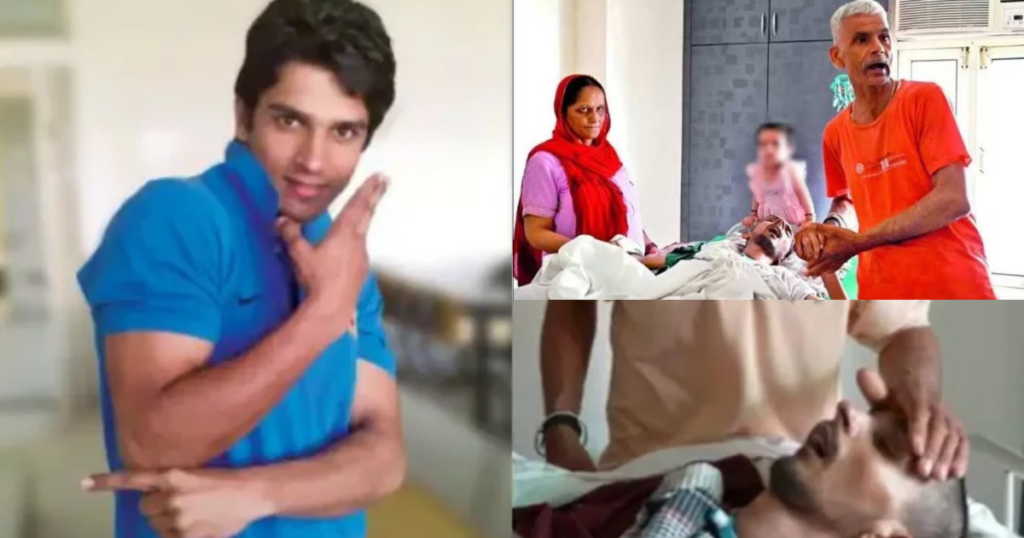
In 2013, Harish Rana was a promising B.Tech student at Panjab University. A tragic fall from a fourth-floor balcony left him with a severe traumatic brain injury and 100% quadriplegic disability. For over a decade, his parents provided unwavering care, but as they aged and Harish’s condition remained irreversible, they petitioned the court to let him go.
What happened at AIIMS?
The Supreme Court, led by Justices J.B. Pardiwala and K.V. Viswanathan, ruled that the “right to die with dignity” is an inseparable part of the “right to life” under Article 21.
- The Process: Harish was admitted to the AIIMS Palliative Care Centre.
- The Definition: The court clarified that withdrawing Clinically Assisted Nutrition and Hydration (CANH)—essentially his feeding and hydration tubes—is a legal cessation of futile medical treatment, not an act of killing.
- The Farewell: A viral “last video” captured a poignant moment at his home before the transfer, where family members and spiritual guides offered final prayers, telling him, “It is okay to go now.”
Harish Rana Last Video LIVE: एम्स में शुरू हुई हरीश राणा की ‘इच्छा मृत्यु’| India’s First Euthanasia
Global Landscape: Who Else Allows This?
While India has now formalized the process for passive euthanasia (withholding treatment), several other countries have much more expansive laws including active euthanasia (administering a lethal substance).
| Country | Type of Law | Status |
| Netherlands & Belgium | Active & Passive | Legal since 2002; includes mental suffering. |
| Canada | MAID (Medical Assistance in Dying) | One of the world’s most active programs. |
| Spain | Active & Passive | Legalized in 2021 for terminal or chronic illness. |
| Colombia & Ecuador | Active | Legalized via landmark court rulings. |
| Switzerland | Assisted Suicide | Legal to provide the means for a patient to end their life. |
| India | Passive Only | Legalized via SC guidelines; involves withdrawing support. |
The Effects: Use vs. Misuse
The legalization of any form of euthanasia sparks intense debate regarding the “Slippery Slope” argument.
The Positive Intent (Use)
- Ending Irreversible Suffering: Provides a “mercy killing” for those in extreme, refractory pain.
- Patient Autonomy: Respects an individual’s right to decide how their story ends.
- Resource Allocation: In a country like India, intensive care beds and ventilators are scarce; some argue they should not be used for “futile” cases where recovery is medically impossible.
The Risks (Probability of Misuse)
- The “Duty to Die”: There is a fear that elderly or disabled patients might feel like a financial or emotional burden and “choose” death out of guilt rather than true desire.
- Inheritance & Malafide Intent: In the Harish Rana judgment, the court specifically warned about relatives potentially using euthanasia to hasten the inheritance of property.
- Medical Misdiagnosis: The risk that a patient might have had a chance at recovery if given more time, though medical boards in India are now required to be two-tier (Primary and Secondary) to prevent this.
Future Outlook
The Supreme Court has urged the Union Government to enact a formal “End-of-Life Care” law. Until then, the “Harish Rana Precedent” serves as the blueprint for how Indian hospitals must handle cases of irreversible vegetative states.
The shift toward palliative care over aggressive, futile intervention marks a maturing of the Indian medical system—moving from “curing at all costs” to “caring until the end.”
Would you like me to find more details on the specific medical protocols AIIMS is using for this procedure?
This video provides the emotional background of Harish Rana’s 13-year struggle and the perspective of his parents leading up to the historic AIIMS transfer.
The Hospital Has a New Brain: Inside Stryker’s AI-Powered Digital Revolution
You may join my Twitter Account for more news updates, Wordle, and more game answers & hints daily.