Silent Killer: Pancreatic ductal adenocarcinoma (PDAC) has long been the “holy grail” of oncology—not because of its glory, but because of its near-impenetrable defenses.
For decades, the medical community has struggled against its high mortality rate and its stubborn resistance to conventional therapies.
Table of Contents
A Breakthrough in the “Silent Killer”: Barbacid’s Lab Eradicates Pancreatic Cancer in Mice
However, a groundbreaking study led by Mariano Barbacid at the Spanish National Cancer Research Centre (CNIO) has shifted the paradigm. His team successfully achieved something previously thought impossible: the total regression of advanced pancreatic tumors in genetically modified mice.
The Strategy: Moving Beyond Single Targets
Most cancer treatments fail because tumors are “smart”; they find bypasses when a single pathway is blocked. Barbacid’s team realized that to win, they had to shut down the cellular machinery from multiple angles simultaneously.
The CNIO study focused on the combined inhibition of two key drivers of tumor growth:
- EGFR (Epidermal Growth Factor Receptor): A protein that promotes cell division.
- c-RAF: A kinase downstream of the KRAS mutation (which is present in 95% of pancreatic cancers).
Key Findings: Total Regression and Zero Resistance
The results, published in the journal PNAS (Proceedings of the National Academy of Sciences), were nothing short of extraordinary. Unlike previous experiments where tumors merely slowed down, this approach led to:
- Complete Disappearance: In a significant percentage of the mice, the tumors didn’t just shrink—they vanished entirely.
- The “Resistance” Barrier Broken: Usually, cancer cells mutate to survive treatment. In this specific dual-inhibition model, the tumors showed no signs of resistance during the observation period.
- Manageable Toxicity: While the treatment is intense, the study showed that the elimination of these targets in adult mice was tolerated, providing a “therapeutic window” for future human application.
Why This Matters for Humans
While we must always be cautious—mice are not “small humans”—this study provides a definitive genetic proof of concept. It proves that if we can develop drugs that precisely mimic this dual-action shutdown, we might finally have a functional cure for a disease that currently has a five-year survival rate of less than 10%.
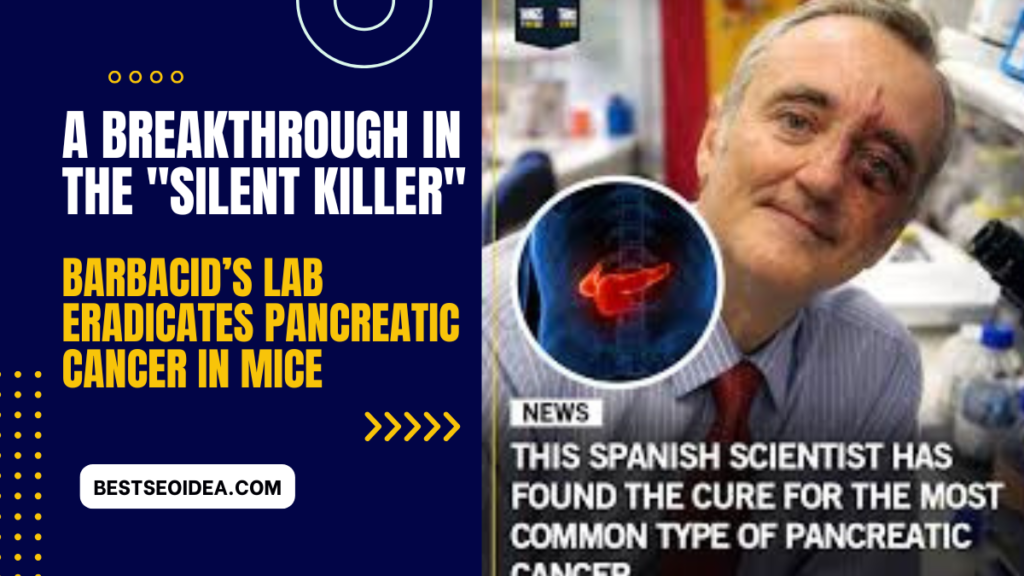
“This is the first time that the complete disappearance of advanced pancreatic cancer has been achieved in an animal model,” Barbacid noted, though he emphasized that the transition to clinical drug development remains the next great hurdle.
The Road Ahead: From Genetics to Drugs
The challenge now lies in pharmacology. The CNIO team used genetic engineering to “switch off” these targets in mice. To replicate this in humans, we need “triple-threat” drug cocktails or highly specific inhibitors that can block EGFR and c-RAF without causing systemic shut-down in healthy cells.
What is China’s New AI Model PANDA? Can it Detect the Pancreatic Cancer in Early Stage?