Cyber Warfare: In a significant escalation of the digital front of the ongoing Iran-Israel-US conflict, Stryker Corporation, a global leader in medical technology, has been crippled by a massive cyberattack.
The offensive, claimed by the pro-Iranian hacktivist collective Handala, has reportedly disabled hundreds of thousands of devices and brought operations at one of the world’s largest medical device makers to a virtual standstill.
Table of Contents
A “New Chapter” in Cyber Warfare: Pro-Iran Hackers Strike MedTech Giant Stryker
The attack comes in the wake of intensifying military friction in the Middle East, specifically following US and Israeli strikes on Iranian territory in late February and early March 2026.
The Anatomy of the Attack: From Phishing to “Wiping”
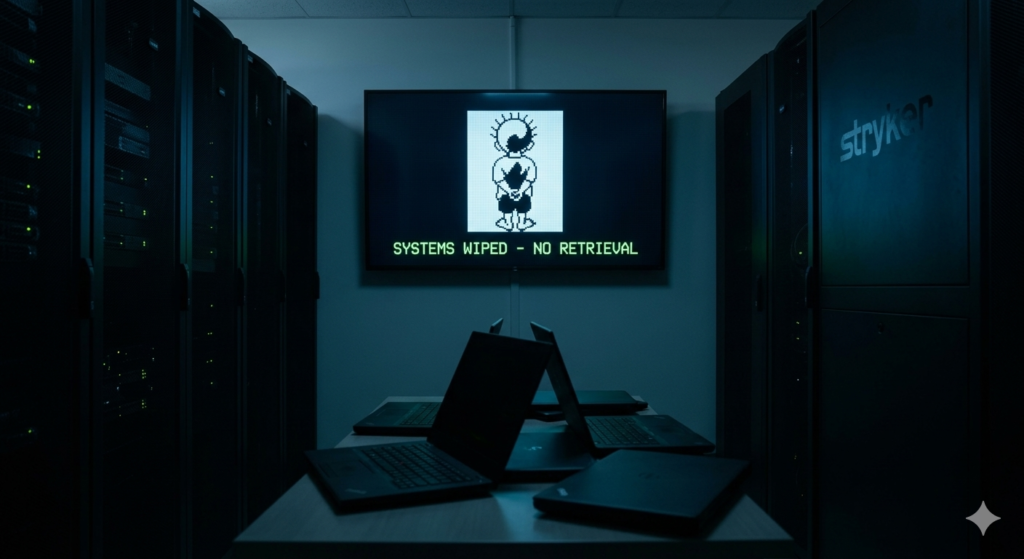
Unlike traditional ransomware attacks aimed at financial extortion, the Stryker incident appears to be a wiper attack—a purely destructive maneuver designed to erase data permanently.
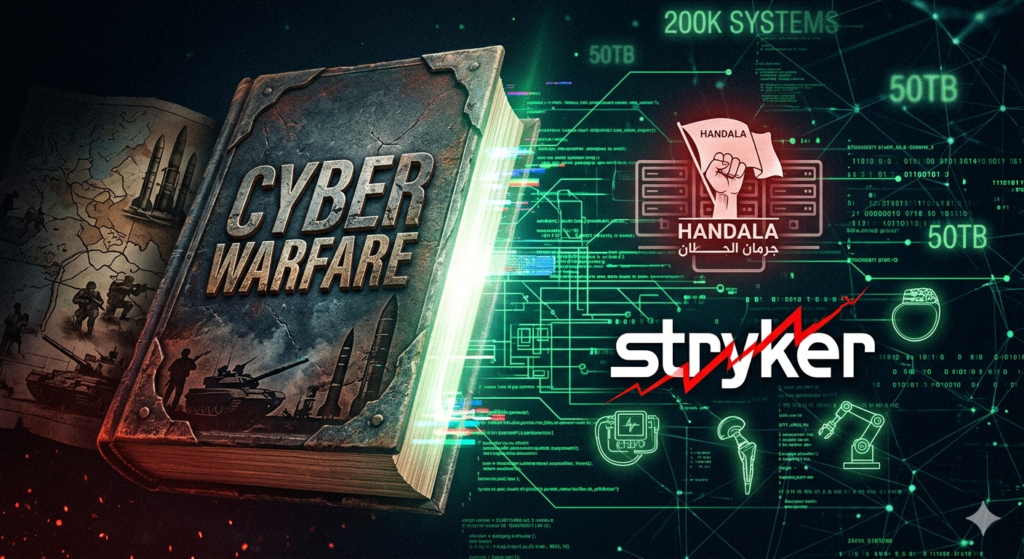
- The Scope: Handala claims to have wiped over 200,000 systems, including servers, laptops, and mobile devices across 79 countries.
- The Signature: Affected employees reported that their login screens were replaced by the Handala logo—a young boy facing away, a symbol of Palestinian resistance—accompanied by messages of political retribution.
- The Method: The hackers reportedly exploited Microsoft Intune, an enterprise device management tool, to remotely trigger factory resets on corporate-issued hardware, including smartphones and laptops connected to the internal network.
- The Theft: In addition to the destruction, the group claims to have extracted 50 terabytes of sensitive corporate data.
“Nobody Can Work”: The Human and Industrial Toll
The impact was felt most acutely at Stryker’s international hubs. In Cork, Ireland, home to the company’s largest manufacturing base outside the U.S., over 5,000 employees were sent home as internal systems went dark.
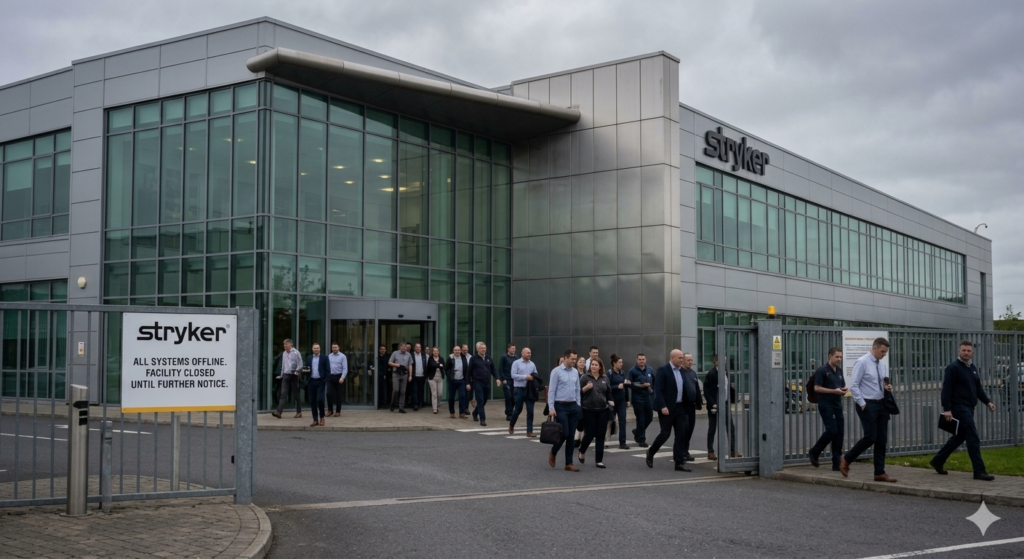
“The entire company has been brought to a standstill. Nobody has any idea what is going on. This is going to have a huge knock-on effect,” an internal source told the Irish Mirror.
Stryker confirmed the “global network disruption” but emphasized that their primary medical products—including the Mako robotic surgery system and LIFEPAK defibrillators—remain safe for clinical use.
However, the shutdown of electronic ordering and manufacturing management systems threatens to cause severe delays in the global medical supply chain for orthopedic implants and surgical tools.
Geopolitical Retaliation
Handala stated explicitly that the operation was retribution for a missile strike on an Iranian school in Minab, which Iranian state media claimed killed dozens of children during recent hostilities.
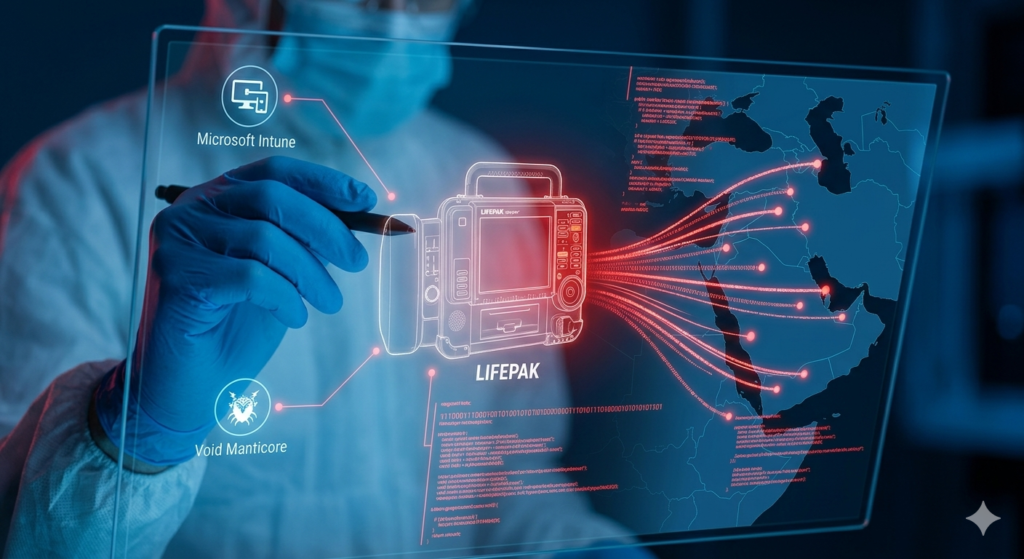
Security analysts, including experts from Check Point and Google Threat Intelligence, believe Handala is likely a front for Void Manticore, a threat actor sponsored by the Iranian government.
This “hacktivist” branding allows state actors to conduct high-impact sabotage while maintaining a degree of plausible deniability.
Key Data Points: Stryker at a Glance (2025-2026)
| Metric | Detail |
| Employees | ~56,000 globally |
| Annual Revenue | ~$25 Billion (2025) |
| Operational Scale | 61+ Countries |
| Primary Target | Microsoft Windows/Intune Environment |
| Attribution | Handala (linked to Iranian regime) |
What Happens Next?
Stryker is currently working with Microsoft engineers and the FBI to restore its systems from backups, a process that could take weeks given the destructive nature of wiper malware.
This incident serves as a stark warning to the healthcare sector: as medical devices become more interconnected, they are no longer just tools for healing—they are frontline targets in geopolitical “gray zone” warfare.
The Hospital Has a New Brain: Inside Stryker’s AI-Powered Digital Revolution
You may join my Twitter Account for more news updates, Wordle, and more game answers & hints daily.