Stryker’s AI-Powered Digital Revolution: On March 9, 2026, medical technology titan Stryker (NYSE:SYK) officially unveiled its SmartHospital Platform.
Launched just ahead of the HIMSS Global Conference, this digital foundation is not merely a new product line; it is a strategic “operating system” for modern medicine.
Table of Contents
Inside SmartHospital Platform: Stryker’s AI-Powered Digital Revolution
By integrating Stryker’s industry-leading medical hardware with the intelligent middleware of Vocera Engage and the ambient sensing of care.ai, the platform aims to solve the three greatest “ghosts” in the hospital machine: system fragmentation, clinician burnout, and delayed care.
1. The Architecture of Connectivity: A Digital Foundation
The SmartHospital Platform functions as an adaptive ecosystem that unifies three previously siloed domains: the device, the data, and the care team. ### Key Technological Pillars:
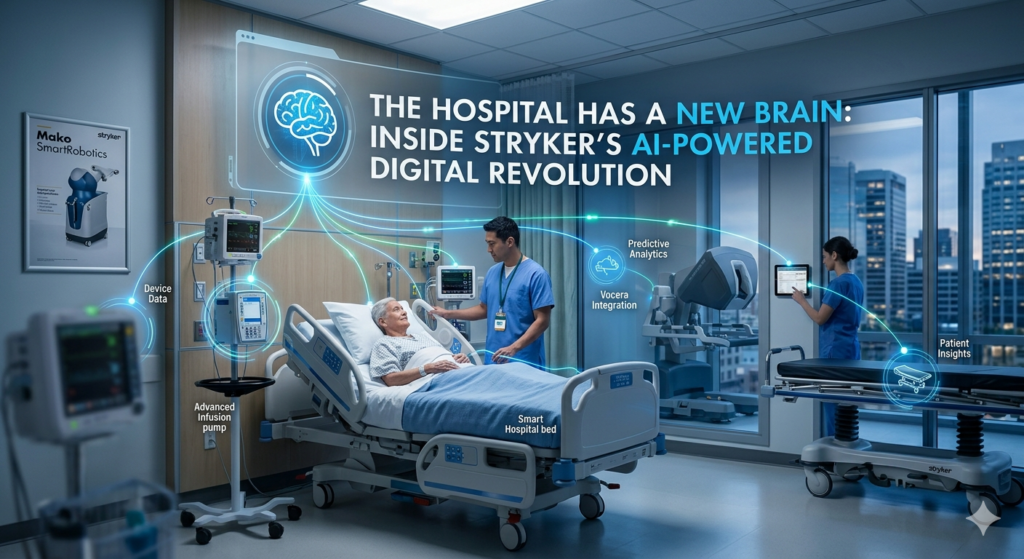
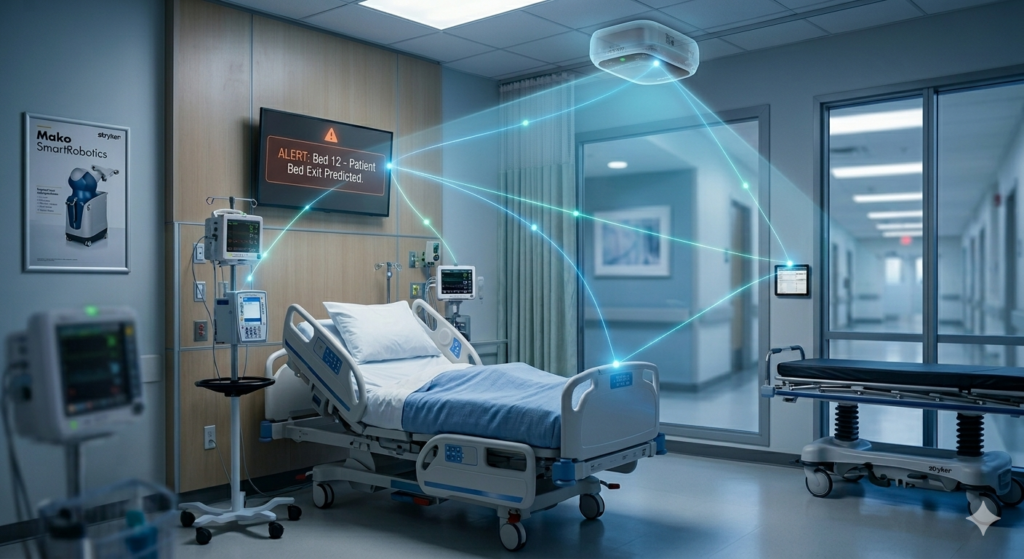
- Ambient Intelligence: Using AI-powered sensors and computer vision, patient rooms become “aware.” These sensors can detect a patient’s movement (e.g., attempting to exit a bed) before an event occurs, shifting care from reactive to proactive.
- Intelligent Middleware (Vocera Engage): This acts as the “brain” of the platform. It filters through the thousands of daily alerts—many of which contribute to “alarm fatigue”—and routes only the most critical, prioritized notifications to the right clinician’s Sync Badge or mobile device.
- Virtual Care Integration: The platform supports virtual nursing and monitoring. Remote teams can handle administrative tasks like admissions, discharges, and routine rounding, allowing bedside nurses to focus on high-acuity clinical needs.
2. Supporting Data: The Case for Intelligence
The launch is backed by a growing body of evidence suggesting that “Smart” isn’t just a buzzword—it’s a clinical necessity.
- Productivity Gains: Predictive AI and robotics are projected to automate up to 30% of hospital operations by 2035, significantly reducing manual data entry and administrative friction.
- Clinical Safety: Studies on AI-guided procedures, a core part of Stryker’s broader digital ecosystem, show that technology can reduce complication rates in complex surgeries (like pedicle screw fixation) from 12.2% to 6.1%.
- Market Growth: The global smart hospital market is expected to surge from $58 billion in 2024 to over $161 billion by 2033, driven by a 12.02% CAGR.
- Patient Outcomes: In pilot implementations of ambient monitoring, hospitals have reported a marked decrease in patient falls and “sentinel events” by providing clinicians with a 5-to-10-second “head start” via predictive alerts.
3. The Benefits: Healing the Healer

Stryker’s platform targets the “Quadruple Aim” of healthcare: enhancing patient experience, improving population health, reducing costs, and—most crucially—improving the work life of care teams.
| Stakeholder | Primary Benefit | Impact Mechanism |
| Nurses | Reduced Burnout | Hands-free communication (Sync Badge) and alarm filtering reduce cognitive load. |
| Patients | Faster Response | Prioritized alerts mean critical issues (sepsis, cardiac distress) are addressed in minutes, not hours. |
| Administrators | Resource Optimization | Real-time data on bed availability and device location (Asset Tracking) streamlines patient flow. |
| Surgeons | Precision Care | Integration with Mako SmartRobotics provides a seamless data loop from pre-op planning to post-op recovery. |
4. The Future: A Self-Learning Organism

Stryker’s vision for the SmartHospital is an ecosystem that evolves. As more devices connect to the platform, it transitions from a connected system to a generative one.
- From Reactive to Predictive: Future iterations will likely leverage Generative AI to summarize entire patient shifts for incoming nurses, reducing “handoff errors” which are a leading cause of medical mistakes.
- The “Hospital Without Walls”: The platform is designed to eventually extend into the home. Through wearables and remote monitoring, the same “SmartHospital” digital foundation will track a patient’s recovery post-discharge, alerting the hospital if a readmission risk is detected.
- Data-Driven Discovery: By aggregating anonymized data across thousands of connected beds, Stryker and its partners can identify subtle patterns in disease progression, turning every hospital into a live “research laboratory.”
Making Healthcare Better In India: A Conversation With Stryker’s Chair And CEO, Kevin Lobo
“The SmartHospital Platform is designed to evolve alongside health systems so teams can work more efficiently and stay focused on patient-centered care.” — Scott Sagehorn, VP/GM of Smart Care at Stryker.
The Magic of Jio World AI Health Checkup: A Revolution at India AI Impact Summit 2026
What is China’s New AI Model PANDA? Can it Detect the Pancreatic Cancer in Early Stage?
You may join my Twitter Account for more news updates, Wordle, and more game answers & hints daily.