Samsung’s “Zero Gravity” Hype vs. Reality: The tech world is currently buzzing with a headline that sounds like it was ripped straight from a 1950s sci-fi novel: “Samsung Just Killed the iPhone with Its First Levitating Phone: Zero Gravity.”
It’s an incredible concept—the idea of a smartphone that defies the laws of physics, hovering above your desk like a piece of Stark Industries tech.
Table of Contents
The Phone That Floats: How Samsung’s Newest Tech Just Ended the Apple Era
Before you start looking for a pre-order link, we need to separate the high-octane “hype-train” from the actual silicon and glass reality of 2026.
The Origin of the “Zero Gravity” Buzz
The “Zero Gravity” moniker actually stems from two places:
- Samsung’s Recent Marketing: At the 2026 Galaxy Experience Spaces, Samsung showcased an interactive exhibit where visitors could record “Zero Gravity” videos by rotating their phones in a specialized gimbal to simulate weightlessness.
- Concept Viral Cycles: High-end 3D renders titled “Samsung Galaxy Zero” have recently gone viral on YouTube and TikTok, showing a bezel-less, port-less device that floats using magnetic repulsion.
While these videos are masterpieces of CGI, they are concept art, not a retail product. However, the real story of how Samsung is challenging Apple this year is just as fascinating, even if the phones aren’t literally flying yet.
The Reality: The Samsung Galaxy S26 Ultra
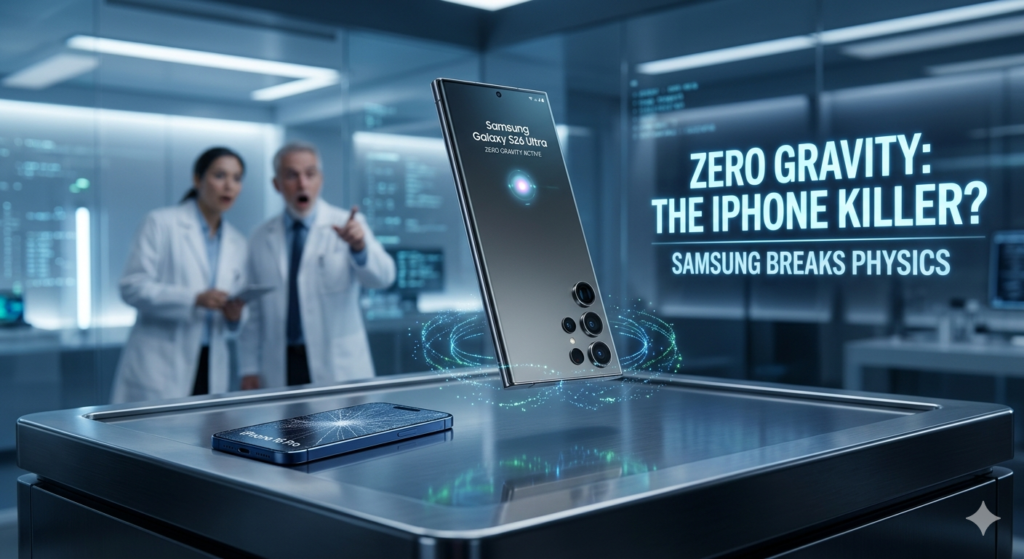
While it doesn’t float, the newly released Galaxy S26 Ultra is being hailed as the “iPhone Killer” for reasons that are actually grounded in reality. Samsung has pivoted from “foldable gimmicks” to “Agentic AI” and hardware that pushes boundaries Apple hasn’t touched yet.
1. The World’s First Privacy Display
In a direct jab at Apple’s “Privacy. That’s iPhone” slogan, Samsung introduced a Built-in Privacy Display. Using a new pixel-shifting layer, the screen becomes completely obscured when viewed from the side. No more plastic screen protectors; your data is physically invisible to the person sitting next to you on the train.
2. “Zero-Lag” Agentic AI
The S26 series introduces Now Nudge. Unlike Siri, which often waits for a command, Samsung’s Agentic AI works in the background. If you’re texting a friend about dinner, the AI automatically checks your calendar, finds a gap, and suggests a reservation—all without you leaving the chat app.
3. The Hardware Powerhouse
To compete with the iPhone 17 Pro’s rumored specs, the S26 Ultra has gone on a “diet” while packing more punch:
- Weight: Dropped to 214g (lighter than the S25 Ultra).
- Thickness: A razor-thin 7.9mm.
- Camera: A 200MP Wide sensor with a new F1.4 aperture—the largest ever in a mainstream Galaxy—designed to “see” in near-total darkness.
Samsung vs. iPhone: The 2026 Landscape
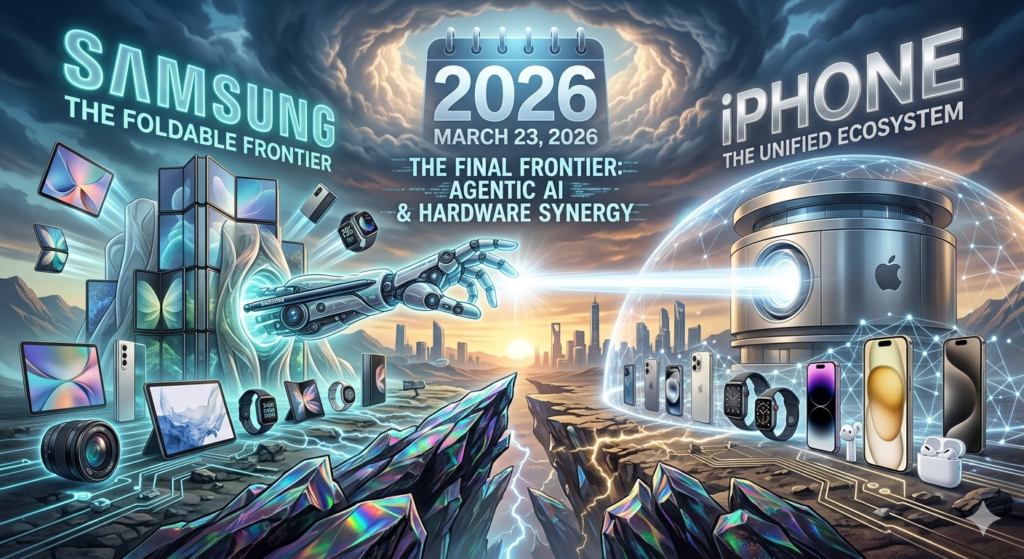
For years, the argument was “iOS for stability, Android for features.” But in 2026, the gap has shifted. Samsung is leaning into Hardware-Software Synergy that feels more “Apple” than Apple.
| Feature | Galaxy S26 Ultra | iPhone 15/16 Pro (Current) |
| Display Tech | Dynamic Privacy Display | Standard OLED |
| AI Integration | Proactive “Agentic” AI | Reactive Voice Assistant |
| Unique Utility | Integrated S-Pen | MagSafe Ecosystem |
| Camera | 200MP + 10x Optical | 48MP + 5x Optical |
Samsung Just Killed the iPhone with Its First Levitating Phone “Zero Gravity”
The Verdict: Did Samsung Kill the iPhone?
“Killing” the iPhone is a tall order. Apple’s ecosystem—iMessage, iCloud, and the Apple Watch—is a “walled garden” with very high walls. However, with the Galaxy S26 Ultra, Samsung has successfully shifted the conversation from how much a phone can do to how intelligently it can do it.
The “Zero Gravity” phone might be a dream of the future, but the S26 Ultra is the most aggressive move Samsung has made in a decade to reclaim the crown of the world’s most innovative smartphone maker.
Beyond the Screen: Why Samsung’s New ‘Galaxy Sphere’ is Following You Around the House
You may join my Twitter Account for more news updates, Wordle, and more game answers & hints daily.