Microsoft MAI-2 Model: The AI landscape has just shifted. In a move that signals Microsoft’s transition from OpenAI’s “biggest benefactor” to its most formidable “in-house rival,” the tech giant has officially unveiled MAI-Image-2.
Table of Contents
Inside MAI-Image-2: How Microsoft Built a Top-3 AI Model Without OpenAI’s Help
This isn’t just another incremental update; it is a declaration of independence. Developed by the elite Microsoft AI Superintelligence team under the leadership of Mustafa Suleyman, MAI-Image-2 has debuted at #3 on the Arena.ai global leaderboard, wedging itself firmly between the heavyweights of Google and OpenAI.
The New Hierarchy of Vision
For years, the “Big Three” in image generation were essentially OpenAI, Midjourney, and Google. Microsoft’s previous internal effort, MAI-Image-1, lingered at the #10 spot—a respectable but non-threatening entry.
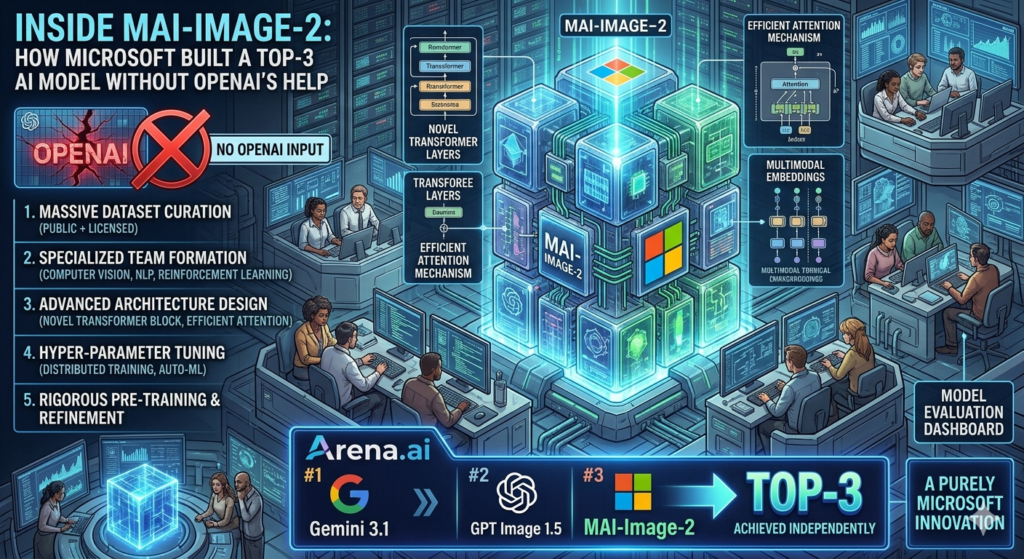
MAI-Image-2 changed that narrative overnight. According to the latest Arena.ai (formerly LMSYS) benchmarks, which rely on blind human preference testing, the current state of the art looks like this:
| Rank | Model | Developer | Key Strength |
| 1 | Gemini 3.1 Flash Image | Speed & Composition | |
| 2 | GPT Image 1.5 | OpenAI | Conversational Editing |
| 3 | MAI-Image-2 | Microsoft | Photorealism & Text Fidelity |
| 4 | Midjourney v7 | Midjourney | Artistic Stylization |
Why “MAI 2” is Shaking the Industry
The “shock” factor isn’t just about the ranking—it’s about the philosophy behind the model. While OpenAI has focused on making DALL-E/GPT-Image more conversational and “agentic,” Microsoft took a different path: they went to the professionals.
Microsoft spent months interviewing photographers, designers, and visual effects artists to identify the “uncanny valley” flaws that make AI images unusable in professional workflows. MAI-Image-2 was built to solve three specific pain points:
1. True Photorealism (The “Lived-In” Look)
Most AI models suffer from a “plastic” or overly sanitized aesthetic. MAI-Image-2 introduces a new approach to natural light refraction and skin texture fidelity. It doesn’t just generate a face; it renders the subtle imperfections—pores, uneven light, and micro-textures—that make an image feel like it was captured on a Leica rather than rendered in a GPU.
2. The Death of “AI Gibberish”
If you’ve ever tried to generate a poster with specific text, you know the frustration of seeing “OpenAI” rendered as “Opne-AAII.” MAI-Image-2 utilizes a specialized typography-aware architecture that treats text as a structural element rather than a visual texture. This allows for near-perfect rendering of signage, infographics, and complex labels within a scene.
3. Workflow Integration (The “Post-Production” Killer)
Microsoft is marketing this as a tool to reduce “fixing it in post.” By delivering higher initial prompt adherence and realistic lighting, the goal is to move the image directly from the MAI Playground into a PowerPoint deck or a marketing campaign without needing a Photoshop cleanup.
The Strategic Pivot: Out of OpenAI’s Shadow
The release of MAI-Image-2 is a tactical masterstroke. By building its own “Frontier Class” models, Microsoft is doing three things:
- Reducing Costs: Running in-house models on their own GB200 NVIDIA Blackwell clusters is significantly cheaper than paying OpenAI’s API margins.
- Customization: Microsoft can now tune models specifically for enterprise safety and Office 365 integration.
- Leverage: It sends a clear message to Sam Altman: Microsoft is no longer a “one-vendor” shop.
“MAI-Image-2 is built for creatives who want images that feel like they exist in the world… Creatives can now spend less time fixing in post-production and more time making.” — Microsoft AI Team
How to Access MAI-Image-2
Microsoft isn’t gatekeeping this tech. It is currently rolling out across the ecosystem:
- MAI Playground: A dedicated environment for enthusiasts to test the model’s limits.
- Copilot & Bing Image Creator: The model is being integrated as the “High Fidelity” option for Pro users.
- Microsoft Foundry: API access is opening for developers, with global giants like WPP already using it for large-scale commercial ad generation.
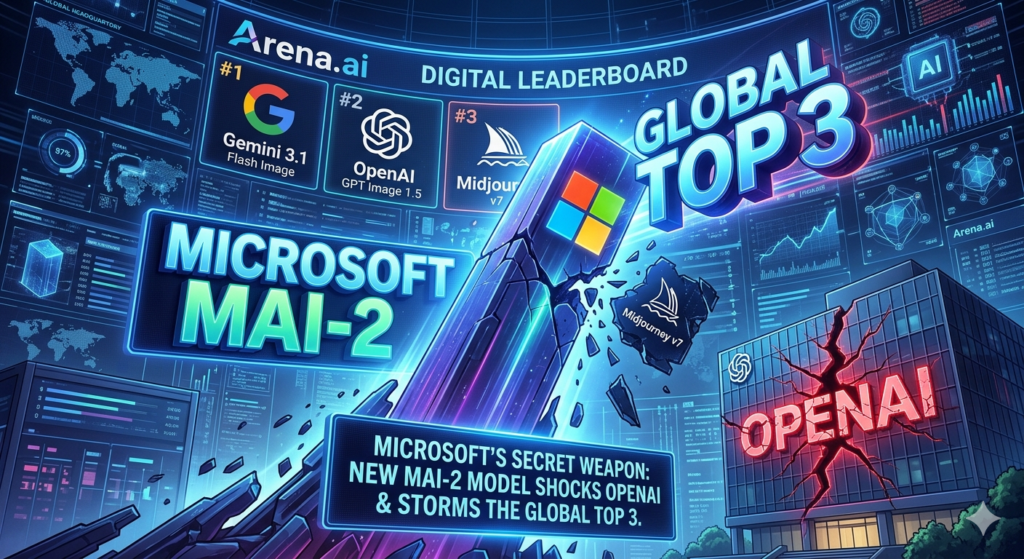
Microsoft’s New MAI 2 Shocks OpenAI and Hits Top 3
The Verdict
The era of OpenAI dominance is over—not because OpenAI has failed, but because the competition has finally caught up. With MAI-Image-2, Microsoft has proven it can build “Superintelligence” grade models in-house. For the first time, the student hasn’t just matched the master; it’s competing for the throne.
WordPress.com Unlocks AI Agents: How to Fully Automate Your Content Strategy in 2026
You may join my Twitter Account for more news updates, Wordle, and more game answers & hints daily.