Hollywood is Shrinking: It’s 2026, and if you’ve been scrolling through Netflix or Disney+ lately, you might have noticed something… different. Sandwiched between the sprawling 8-episode epics and the 2-hour blockbusters, a new breed of content has emerged: the vertical drama.
Think of it as TikTok’s storytelling ambition fused with Hollywood’s production muscle, all crammed into a bite-sized, portrait-mode package.
Table of Contents
Hollywood is Shrinking: Inside the High-Stakes World of 2-Minute Vertical Dramas
These aren’t just glorified short films or expanded social media skits. We’re talking about high-budget, narrative-driven series designed specifically for your phone screen, where every shot is framed vertically, and the story unfolds in 120-second bursts.
So, how did we get here? And why is Hollywood, a town built on grand cinematic canvases, suddenly embracing the tiny rectangle?
The Attention Economy Strikes Back
For years, the battle for your attention has been intensifying. Streaming services flooded us with endless choices, leading to “decision fatigue.” Then came TikTok, Instagram Reels, and YouTube Shorts, proving that millions would happily trade complex narratives for instant gratification.
Hollywood, initially dismissive, quickly realized the undeniable truth: the youth market lives vertically. Data showed plummeting engagement with traditional horizontal content among Gen Z and younger Millennials, who are fluent in the language of the scroll. The solution? Don’t fight the phone; become the phone.
Netflix’s “Scroll Stories” and Disney+’s “Portrait Play” initiatives, launched in late 2025, were direct responses. They poured millions into developing content that felt native to the vertical experience, rather than just chopped-up horizontal shows.
The Art of the Micro-Drama: It’s Harder Than It Looks
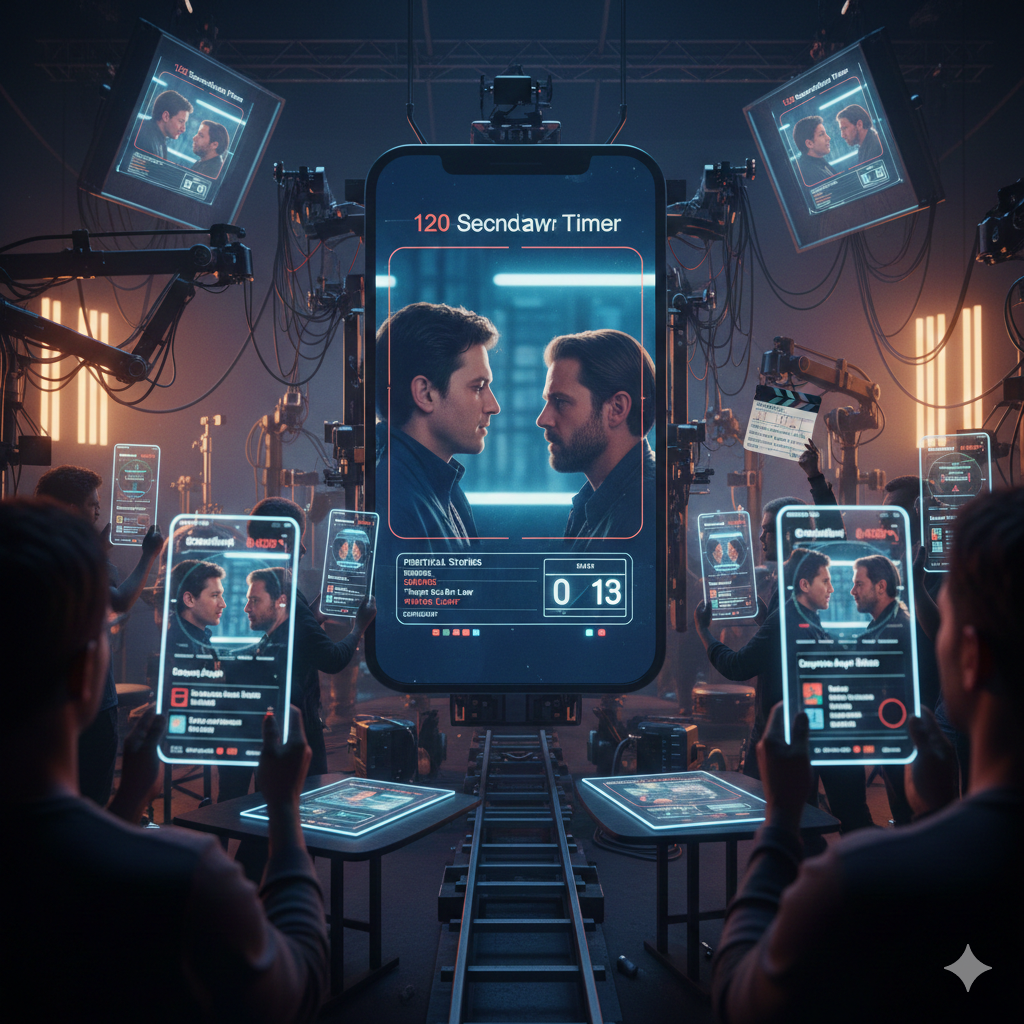
Creating a compelling vertical drama is an entirely new beast. Imagine trying to build character arcs, tension, and a satisfying conclusion, knowing your audience might swipe away after 10 seconds.
Visual language has been completely rethought. Directors now compose shots with the phone’s top, middle, and bottom thirds in mind. Close-ups are king, allowing for intimate, immediate connection with characters. Storytelling beats are faster, cliffhangers are mandatory at the end of every 120-second episode, and exposition is often delivered through on-screen text overlays, mimicking social media trends.
“It’s like directing a play where the stage is a narrow hallway, and the audience has ADHD,” jokes Maya Singh, showrunner for Netflix’s breakout vertical hit, The Echo Chamber, a psychological thriller told entirely through video calls and surveillance footage. “Every single second counts. You can’t waste a frame.”
The “18-Hour-Day” Controversy: The Human Cost of Speed
While audiences are devouring these rapid-fire narratives, the industry is grappling with a dark side: the brutal production schedules. The demand for constant, fresh vertical content has led to what many on sets are calling the “18-Hour-Day” phenomenon.
Crews are expected to churn out episodes at an unprecedented pace. Writers are drafting scripts daily, directors are shooting multiple “micro-episodes” in a single day, and editors are working around the clock to meet aggressive upload schedules. The workflow is more akin to a TikTok content farm than a traditional film set.
“We’re basically running a marathon at a sprint pace, every single day,” says a weary lighting technician who wished to remain anonymous, currently working on Disney+’s Gamer Girls, a comedy series about a pro-gaming esports team. “The pressure to deliver constant, high-quality content for such short runtimes means corners get cut on sleep, not on story.”
Unions are now pushing for new regulations to protect crews in this rapidly evolving sector, highlighting the human cost of the attention economy.
From FYP to Feature Film: The Future is (Still) Unwritten
Despite the challenges, vertical dramas are undeniable proof that Hollywood can adapt. They are generating massive engagement, particularly among younger demographics, and serving as fertile ground for new talent who understand the rhythm of short-form storytelling.
Some of these vertical hits are already being optioned for traditional, horizontal feature films or expanded series. The “Scroll Story” could very well be the new “viral tweet” – a proving ground for ideas that eventually make it to the big screen.
The question isn’t whether vertical dramas are here to stay, but how they will continue to evolve. Will they remain a distinct format, or will their fast-paced, direct storytelling influence traditional cinema? One thing is certain: the future of entertainment might just fit in the palm of your hand, portrait-mode and all.
The Top 10 US YouTube Channels Built for Green Screen Success in 2026
You may join my Twitter Account for more news updates, Wordle, and more game answers & hints daily.